

![[object Object]](https://cdn.livebid.cz/authors/7688.jpg?v=2)
Základní údaje
| signatura | signováno vzadu: Krištof Kintera 2000-24 |
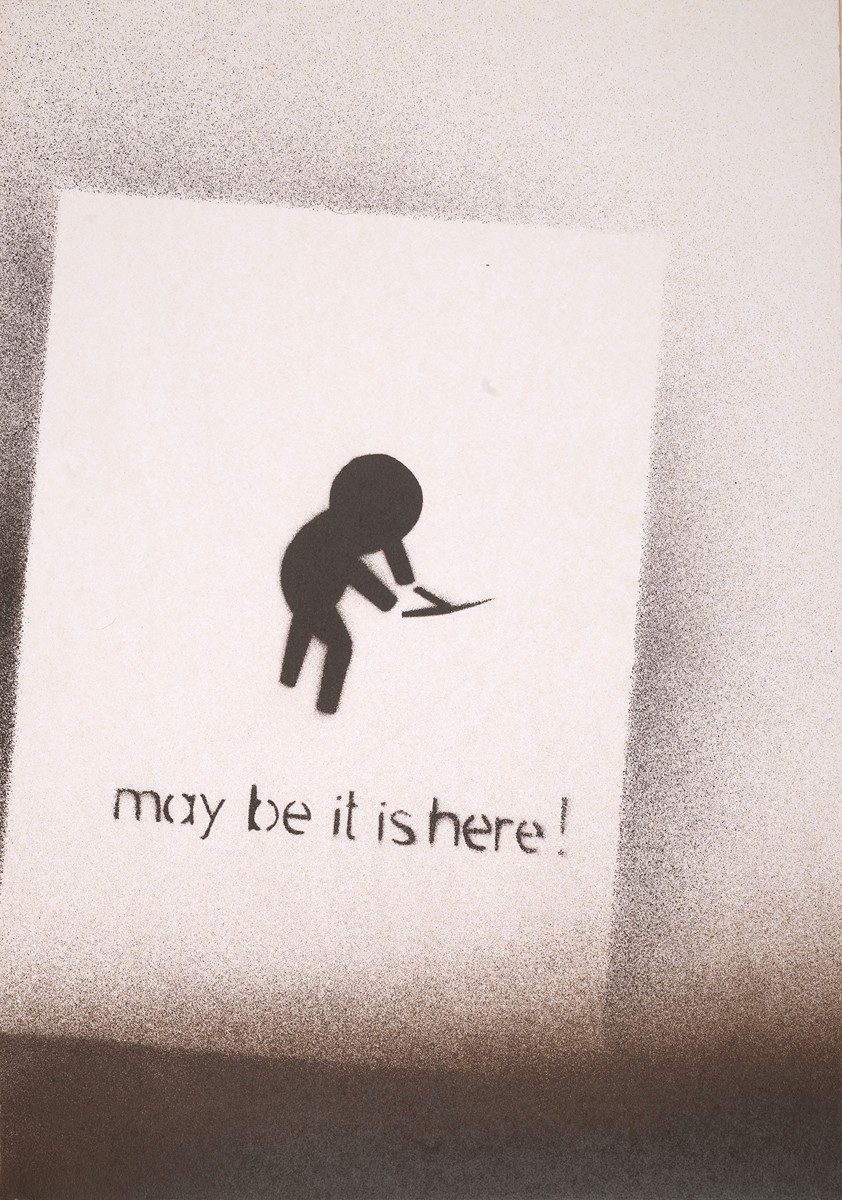
| technika | šablona spray na kartonu |
| rozměry | 50x35 cm |
| rok | 2000-2024 |
Popis
Krištof Kintera – nápadů gejzír
Zaplnil by svět, ba co vesmír
Staré lucerny vyskládá do řady
Telefony, šňůry dle nálady
Jakoby byl samouk inženýr.
Sestavuje vše jak rychlý kurýr
Ba i otiskne postavu na papír
Na ledě Sršány má za kamarády
Možná je to tady
May be it is here.
(David Vávra)
Krištof Kintera absolvoval AVU v Praze a následně pokračoval ve studiu na Rijksakademie van beeldende kunsten v Amsterdamu. V letech 1999, 2001 a 2003 byl nominován na Cenu Jindřicha Chalupeckého. V posledních letech připravil samostatné výstavy pro pražské galerie Kunsthalle, Centrum současného umění DOX či Rudolfinum, ze zahraničních galerií pak pro Heldenreizer Contemporary v Mnichově, Kali Gallery v Lucernu či Ron Mandos Gallery v Amsterdamu. Právě posledně jmenovaná představila výstavu s názvem May be it is here, na niž odkazuje i nabízené dílo. Že v sobě má kus provokatéra ukázal Krištof Kintera při spolupráci s umělcem Davidem Černým na kontroverzní instalaci Entropa v roce 2009 a svoji něžnější polohu naopak ukázal ve výstavě Nervous Trees, která v roce 2017 doslova pohltila prostory galerie Rudolfinum. Touto velkolepou instalací ze starých kabelů, základních desek a rozebraných mobilních telefonů, kterou navštívilo přes 160 tisíc návštěvníků, Krištof Kintera potvrdil svoji pozici na české výtvarné scéně.
O autorovi
- In 1999, 2001 and 2003 he was nominated for the Jindřich Chalupecký Award
- In recent years he has prepared solo exhibitions for the Prague galleries Kunsthalle, the DOX Centre for Contemporary Art and Rudolfinum, and abroad for Heldenreizer Contemporary in Munich, Kali Gallery in Lucerne and Ron Mandos Gallery in Amsterdam
Krištof Kintera lives and works in Prague. He graduated from the Academy of Fine Arts in Prague, where he studied in the studios of Jiří Lindovský, Aleš Veselý, Michael Bielický and Milan Knížák. He then continued his studies at the Rijksakademie van beeldende kunsten in Amsterdam. In 1999, 2001 and 2003 he was nominated for the Jindřich Chalupecký Award. In recent years he has prepared solo exhibitions for the Prague galleries Kunsthalle, the DOX Centre for Contemporary Art and Rudolfinum, and abroad for Heldenreizer Contemporary in Munich, Kali Gallery in Lucerne and Ron Mandos Gallery in Amsterdam.
By now his work is known to almost everyone. Ever since his first exhibition project TO in 1996 he has been one of the leading figures of the Czech scene. The success of his work, however, does not rest on sarcastic humour and gentle exaggeration opening up serious contemporary themes alone; it grows out of a long-term effort to analyse our relationship to our surroundings, to nature and to ourselves.
In the 1990s and 2000s he won popularity above all with his kinetic sculptures and monumental installations. It would be hard to forget the subversive Appliances (1997-1998) or the philosophising Talkers (1999), metaphorical commentaries on human existence. He showed the provocateur in him when he worked with the artist David Černý on the controversial Entropa installation in 2009, and he revealed his gentler side in the exhibition Nervous Trees, which in 2017 literally swallowed up the spaces of the Rudolfinum gallery. With that grand installation of old cables, motherboards and dismantled mobile phones, seen by more than 160,000 visitors, he confirmed his position on the Czech art scene.
