

![[object Object]](https://cdn.livebid.cz/authors/6476.jpg?v=2)
Základní údaje
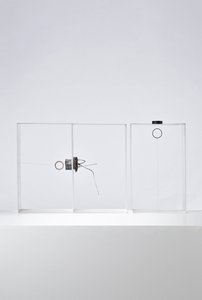
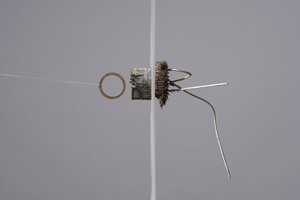
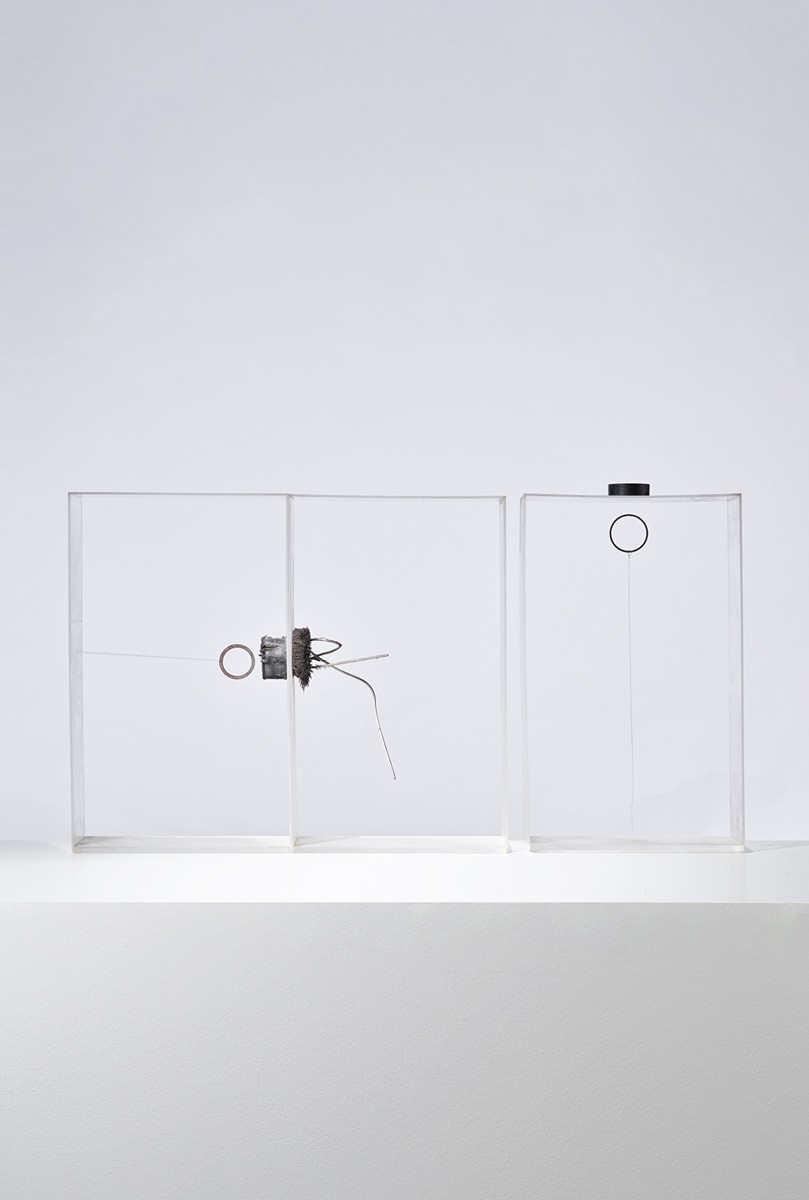
| technika | magnety, ferity, kov, plexisklo, tři plexiboxy – dva z nich vzájemně spojené |
| rozměry | 49,5 × 60 × 15 cm, 51,5 × 30 × 15 cm |
| rok | 1971–1972 |
Popis
PROVENANCE
An important private collection of contemporary art, acquired from the artist.
Dalibor Chatrný's work represents a special form of kinetic art in which movement is only potentially present and takes place more in the viewer's perception, consciousness and interpretation than in the object itself. The use of magnets creates tension and the impression of instability, of a fragile, threatening order. These evocations relate not only to the time of the artifact's creation (the early 1970s as a period of advancing political "normalization"), but also refer to reflections on the nature of the artwork. Should the artefact rather express stability and demonstrate the unambiguity and immutability of the author's idea, composition and intention, or can it also work with uncertainty, chance and temporality? Dalibor Chatrný also explores such questions in a number of his other works, which can also function as an object-based or artistically conceived theory of art.
Magnetism occurs as a creative and disconcerting principle in the works of various artists (e.g. Margita Titlova Ylovsky etc.), where it plays the role of a remarkable paradox - the viewer perceives the action of given forces and at the same time the caesura, the spacing, the void between the bodies that interact. The strange sensation of empty space represents a kind of narrative interruption, a brief gap in an otherwise continuous stream of signs and phenomena. Into this tiny gap the viewer's gaze can imaginatively fall, enter the painting. Magnetic forces are an active factor in the work, a kind of co-author, whose apparent arbitrariness and ignorance, however, increases the aforementioned impression of tension and uncertainty. Magnetism has been intensively investigated in various contexts since the early 19th century (e.g. in connection with hypnosis by Franz Anton Mesmer, in the context of physiological studies by Jan Evangelista Purkyně, etc.) and has often been regarded not only as a natural phenomenon, but also as an almost occult phenomenon with spiritual overtones. A certain myth of magnetism influences the viewers' perception of Dalibor Chatrný's artefact, but mainly it underlines the partly ironic nature of the object (ironic reflections of various artistic and non-artistic stereotypes and established ideas appear very often in Chatrný's work).
Dalibor Chatrný is one of the most remarkable Czech artistic experimenters and, consequently, creators/theorists of art from the second half of the 20th century. Among such artists, whose work was at the same time a specific reflection and theory of art, we include Marcel Duchamp, Piero Manzoni, Allan Kaprow and many others. It can be said that in the work of similar artists, the most fundamental shifts in modern art took place.
O autorovi
Dalibor Chatrný se narodil 28. srpna 1925 v Brně. Byl významným moravským výtvarníkem, konceptuálním umělcem, malířem, grafikem a pedagogem, a celý svůj život úzce souvisel s Brnem.
Narodil se do rodiny řídícího učitele Metoděje Chatrného a jeho manželky Marie. Jeho mladší bratr Ivan Chatrný byl rovněž výtvarník a grafik.
Po maturitě na 1. České státní reálce v Brně v letech 1936–1944 studoval na Pedagogické fakultě Univerzity Karlovy, kde měl za učitele významné osobnosti, jako Cyril Bouda, Martin Salcman, Josef Sejpka, František Kovárna a Karel Lidický. Později, v letech 1949–1953, pokračoval ve studiu na Akademii výtvarných umění v Praze pod vedením Vladimíra Sychry, Vladimíra Silovského a dalších.
Dalibor Chatrný se rovněž věnoval pedagogické činnosti. V letech 1958–1960 učil na Střední uměleckoprůmyslové škole v Brně, a později v letech 1963–1986 vedl oddělení propagační grafiky na téže škole. Kromě toho působil na několika dalších uměleckých institucích, jako Akademie výtvarných umění v Praze, Fakulta výtvarných umění VUT v Brně, a Janáčkova akademie múzických umění v Brně.
Chatrný začínal převážně v oblasti grafiky a klasické kresby, ale již od konce 50. let 20. století začal experimentovat s novými materiály, formami a tvůrčími postupy. Proslul také tím, že zkoumal výtvarné ztvárnění literárních textů, úpravy fotografií a dalších uměleckých děl. Jeho tvorba odráží jeho inovativní a experimentální přístup k uměleckému vyjádření. Mezi jeho známá díla patří například skulptura "Hnízdo" v univerzitním kampusu v Bohunicích. Zemřel 5. července 2012 v Rajhradu u Brna.
