

Basic info
| technique | Handwritten letter |
| dimension | 310 x 260 mm (size of the pad) |
| profession | Painter |
| country | England |
| signature | Original signature |
About
profession: Painter | country: England | signature: Original signature | size: 310 x 260 mm (size of the pad) | technique: Handwritten letter
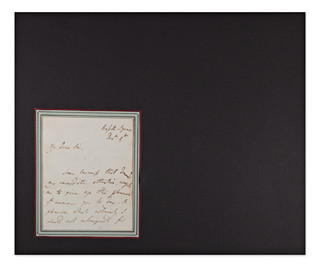
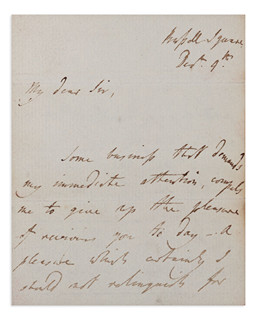
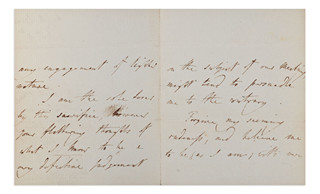
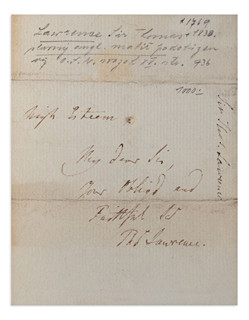
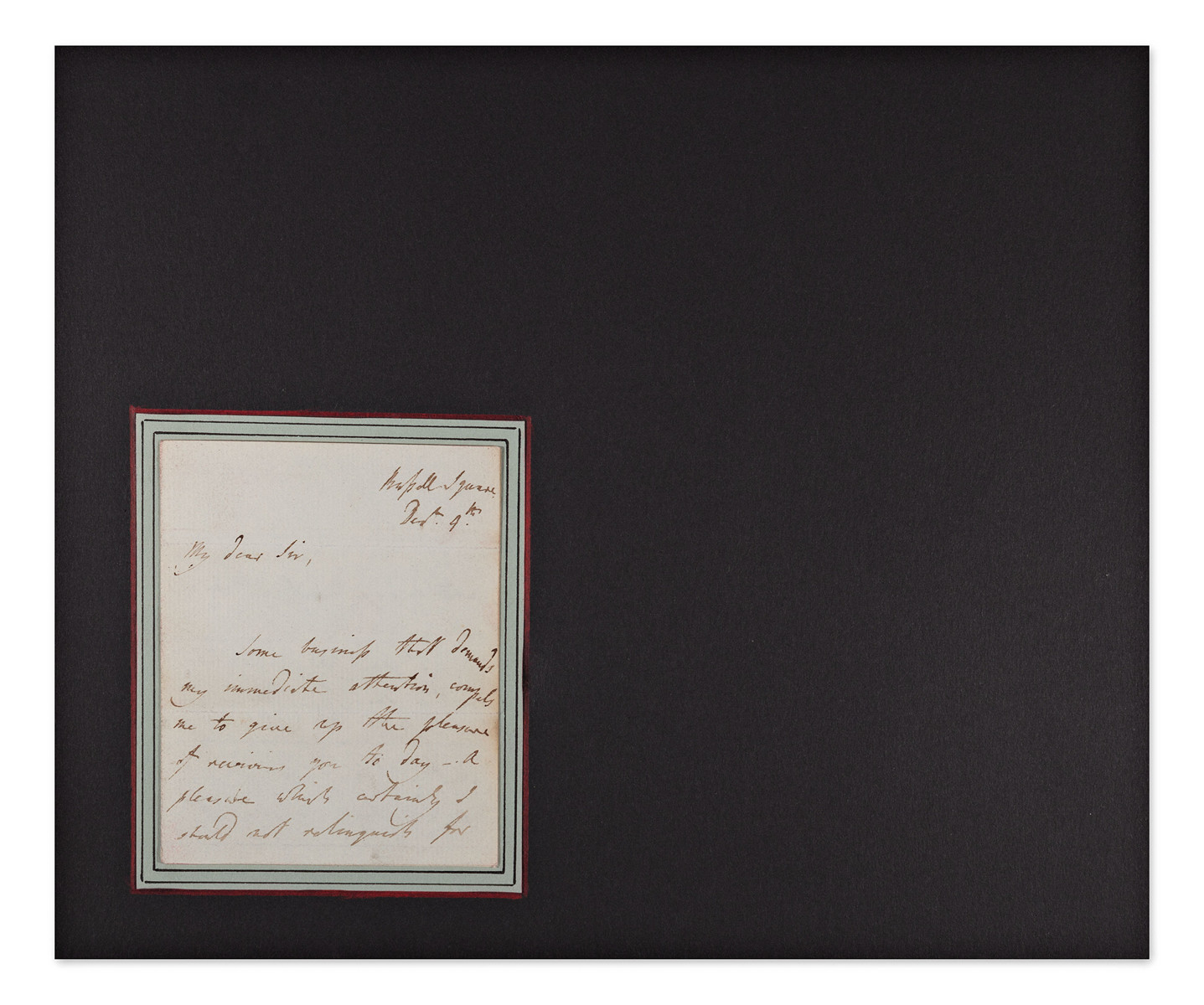
Handwritten letter from Sir Thomas Lawrence, one of the most prominent English portrait painters of the Romantic era, known for his portraits of members of the British royal family and significant figures of his time. The letter is dated and includes his signature, which adds historical value to this correspondence. The letter pertains to business matters and mentions his current work commitments and plans, which is consistent with his role as a painter frequently employed by nobility and government officials. The letter is written on four pages, reflecting its detailed nature and content. Sir Thomas Lawrence was elected president of the Royal Academy in 1820, thus solidifying his position among the leading European artists. Handwritten documents from this painter are rare and hold high collectible value, especially considering his historical significance.
Lot information
Handwritten letter from Sir Thomas Lawrence, one of the most prominent English portrait painters of the Romantic era, known for his portraits of members of the British royal family and significant figures of his time. The letter is dated and includes his signature, which adds historical value to this correspondence. The letter pertains to business matters and mentions his current work commitments and plans, which is consistent with his role as a painter frequently employed by nobility and government officials. The letter is written on four pages, reflecting its detailed nature and content. Sir Thomas Lawrence was elected president of the Royal Academy in 1820, thus solidifying his position among the leading European artists. Handwritten documents from this painter are rare and hold high collectible value, especially considering his historical significance.
