

Basic info
| rok díla | 1873 |
| technika | Olej na plátně |
| rozměr | 71.5 x 48.8 cm |
| Období | 19. století, britský orientalismus |
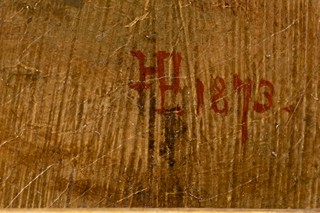
| Signatura | Monogramováno a datováno „1873“ vpravo dole |
About
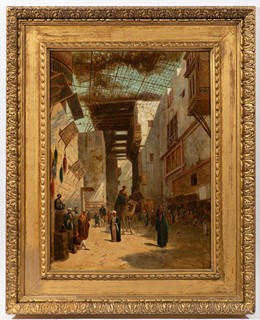
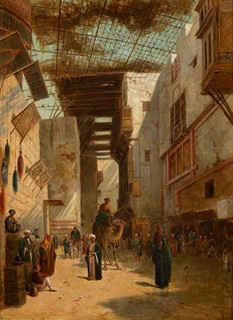
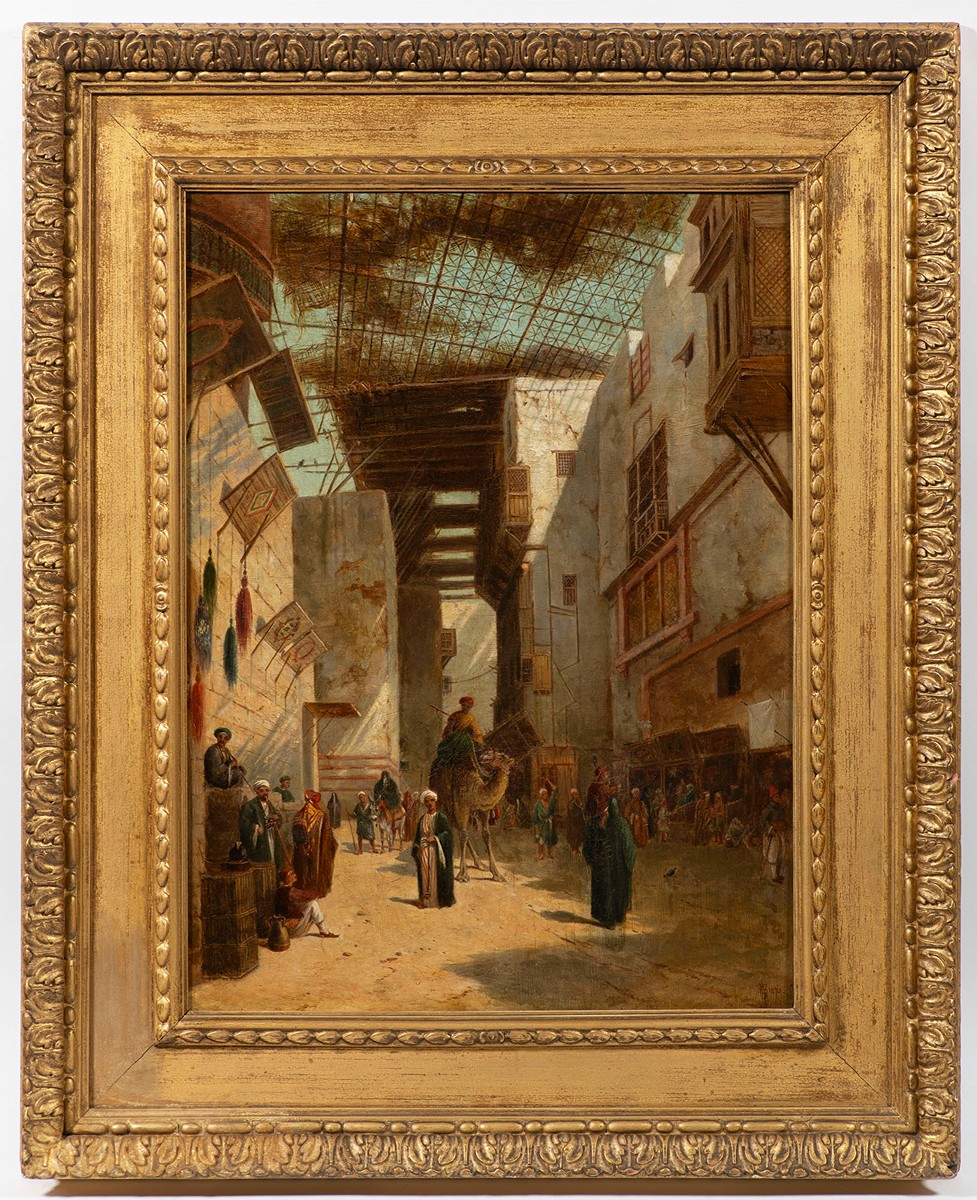
This fine Orientalist composition, executed in 1873, presents a highly detailed architectural and social study of a Cairene bazaar. The work demonstrates the rigorous academic training characteristic of the British Orientalist school of the late 19th century, evidenced by the artist’s precise control of linear perspective and the sophisticated handling of natural light.
The painting is distinguished by its masterful management of chiaroscuro within an outdoor setting. The artist employs a complex filtration of light, captured as it penetrates the overhead timber and palm-matting lattice, which creates a rhythmic sequence of dappled highlights and cool, deep shadows across the composition. This technique effectively models the architectural volume of the surrounding structures and provides an atmospheric depth that is characteristic of top-tier academic painting of the period.
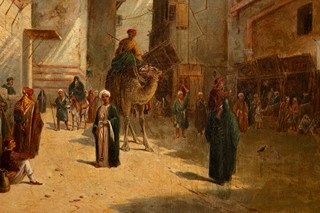
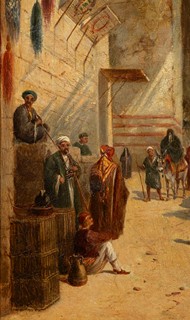
The application of paint is precise, with a controlled impasto used to define the textures of the stone walls, the coarse weave of the merchant textiles, and the intricate anatomical details of the central dromedary. The color palette is harmoniously balanced, utilizing earthy ochres and burnt siennas to depict the desert dust, contrasted against the cool, sharp blue of the shadowed areas.
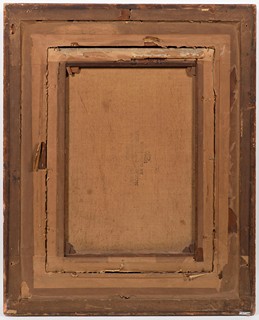
The use of a premium-grade Winsor & Newton prepared canvas, identified by the studio stamp on the reverse, confirms the artist’s commitment to high-quality archival materials, a standard practice among professional painters operating within the London art market during this era. This piece stands as a disciplined, technically accomplished example of the 19th-century fascination with the Levant. Monogrammed and dated "1873" (lower right). Oil on canvas, 71.5 x 48.8 cm
