
![[object Object]](https://cdn.livebid.cz/imgs/1869/tn/253.jpg?v=2)
Basic info
| rok díla | 1982 |
| technika | bromostříbrná fotografie |
| rozměr | 29,8x23,4 cm |
About
1982
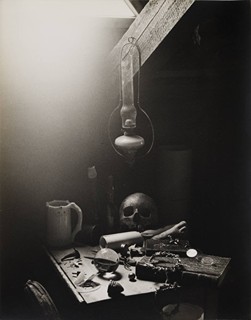
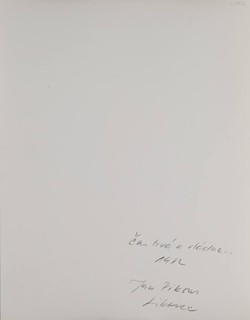
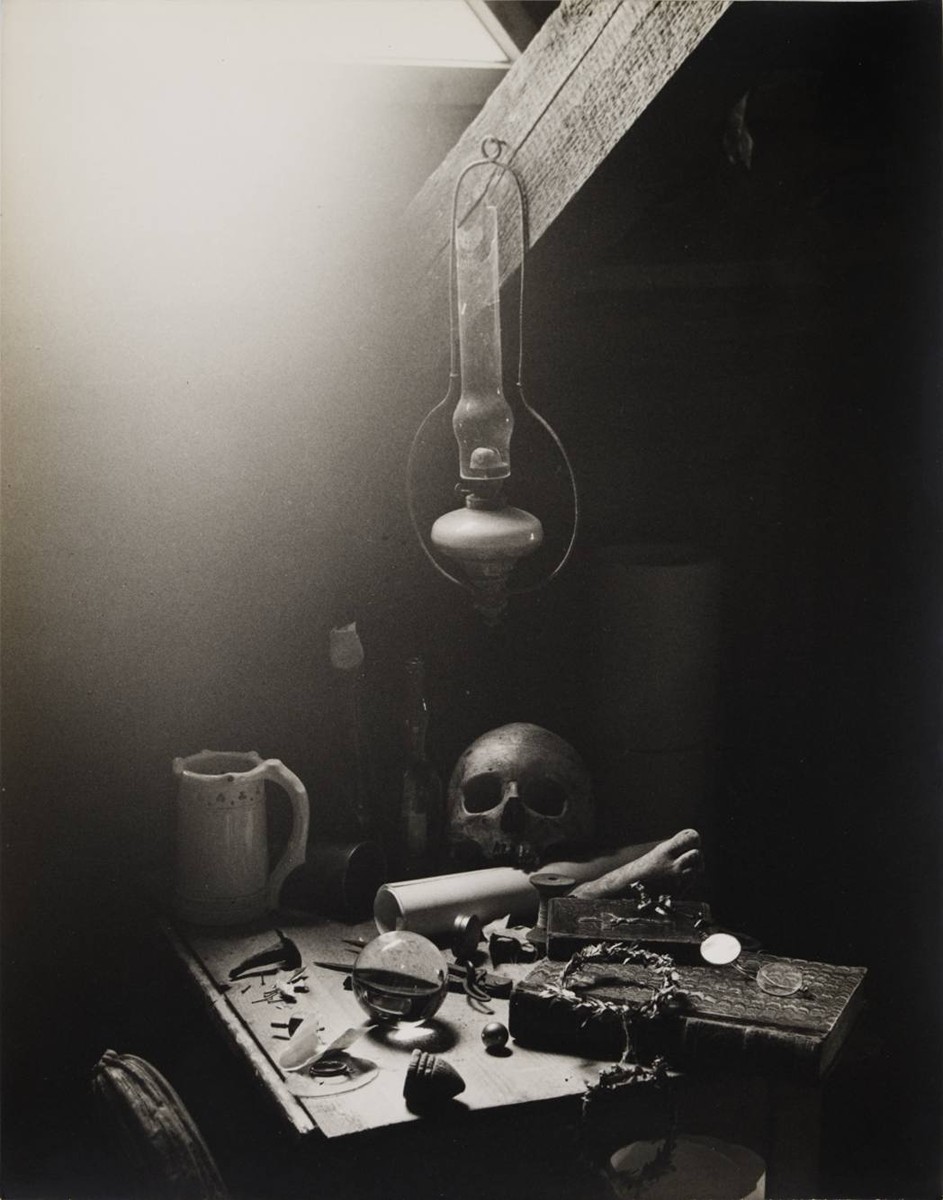
Silver gelatin print on matte paper, original author's enlargement. 29.8x23.4 cm. Verso in pencil the title of the work, dating, the author's signature and location.
Slightly creased lower left corner.
A further example is held in the collections of the Moravian Gallery in Brno, inv. no. MGA 4239.
Jan Pikous – a Czech photographer of portraits, landscapes, nudes, still lifes and abstractions. He is the author of monumental photographs for the Liberec Exhibition Fair, of promotional publications, calendars, posters, postcards and record-sleeve covers, and also of six books with his own texts and photographs. His photographic montages (sandwiches of several negatives, or slides, layered on top of one another) and double exposures are well known, as are his travel photographs from wanderings through South Bohemia and the Jizera Mountains. He studied at a business school in Zlín from 1946–47. He began working in the promotional department of the Baťa company; in the 1950s he changed jobs several times in the commercial field, and from 1959–62 worked in the commercial section of the state enterprise Textilana in Liberec. He then worked as a photographer at the national enterprise Plastimat Liberec. From 1972 he set out on the path of a freelance photographer–artist. He first tried writing and drawing. He began photographing at the end of the 1950s. He was introduced to photography by his friend Jindřich Švec, who also introduced him to the photographers Vilém Boháč and František Dostál. Both were professional photographers with an artistic reach and initiated Pikous into the secrets of photography. In the 1960s his first photograph was published in a newspaper. His early artistic work was influenced by the abstract works of Eva Fuková, Emila Medková, Jan Reichman and especially Čestmír Krátký. Between 1962 and 1968 he was a member of the Liberec Studio of Art Photography, which organized independent exhibitions. In his photographic work he devoted himself in the 1970s mainly to still lifes, and in the 1980s to colour impressions. From that period comes his collection of subjective photographs – abstractions of structures and natural motifs, inspired by Professor Otto Steinert and his school of subjective photography in Saarbrücken. With photographs made from slide sandwiches he achieved success in the 1990s and at the beginning of the 21st century in Japan. Pikous started out with a Flexaret III camera in 6x6 format, later photographing with Praktisix and Pentacon Six cameras, as well as a Mamiya Super 23 in 6x9 format. He worked with the Swiss Cibachrome slide technique. At the beginning of the 1960s he left, or rather was expelled at his own request, from the Communist Party. He wrote an open letter to Dubček in which he called the political leadership of the 1950s fascists in connection with the torture and death of the priest Josef Toufar. He responded to the self-immolation of Jan Palach through his photographs. He did not turn up to vote in the National Assembly elections and threw out the commission that came to his home with the ballot box. This, however, did nothing to win him favour with the communist regime. He was banned from exhibiting until the fall of the regime in 1989. He thus made his living as a freelance photographer of calendars and postcards. From that period comes his set of postcards with still lifes. In 1992 his photographs were discovered at an exhibition at the North Bohemian Museum by the Japanese curator Hiroe Naito, who organized an exhibition for him in Tokyo, which was subsequently repeated annually a total of nine times, also in other Japanese cities.
