
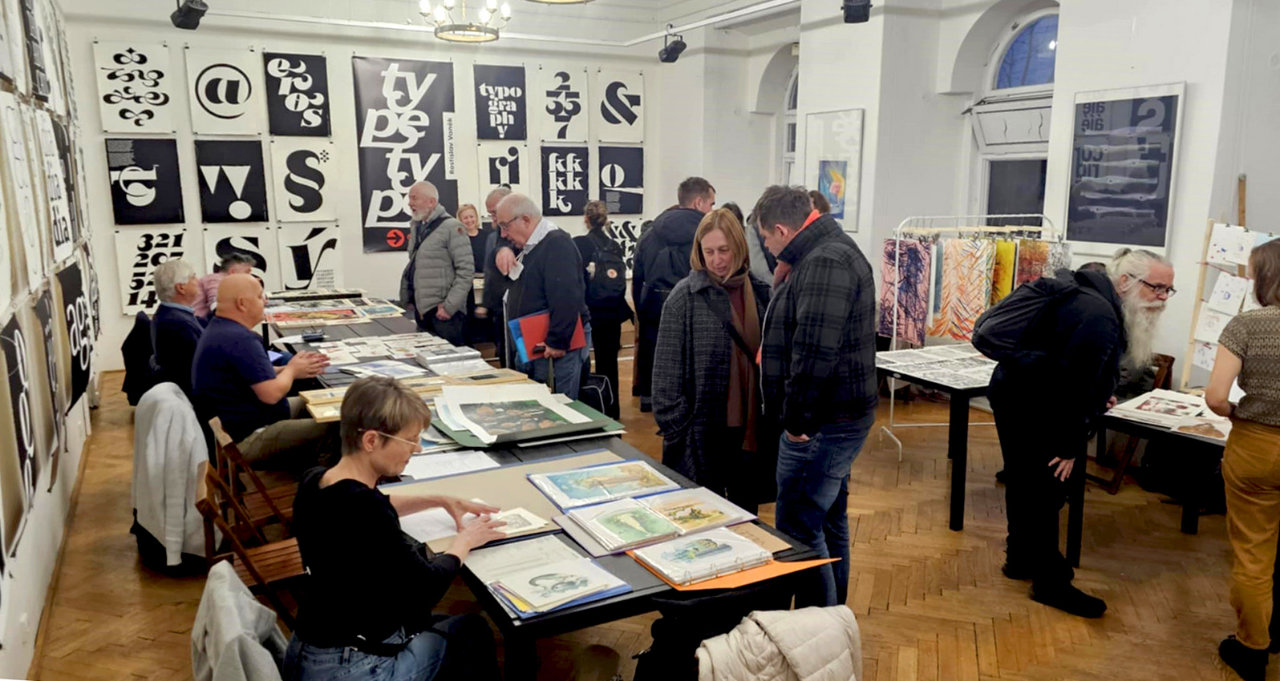
People Increasingly Crave Adventure: A Conversation with Printmaker Milan Starý on the Value of Graphic Works
Graphic prints represent a very interesting collector’s item: their technical diversity offers a broad aesthetic and conceptual range of works, and at the same time the collector gains the possibility of adding more affordable works to their collection by artists whose paintings or other more expensive media would otherwise be out of reach.

When buying prints, it is good to know which parameters to focus on and, ideally, how to at least basically distinguish an artist’s proof from a reproduction. We talked to printmaker and member of the Hollar Association of Czech Graphic Artists, Milan Starý, about the influence the imprint itself has on the process of creating a print, how contemporary approaches to graphic techniques are changing, and what information to focus on when selecting them.
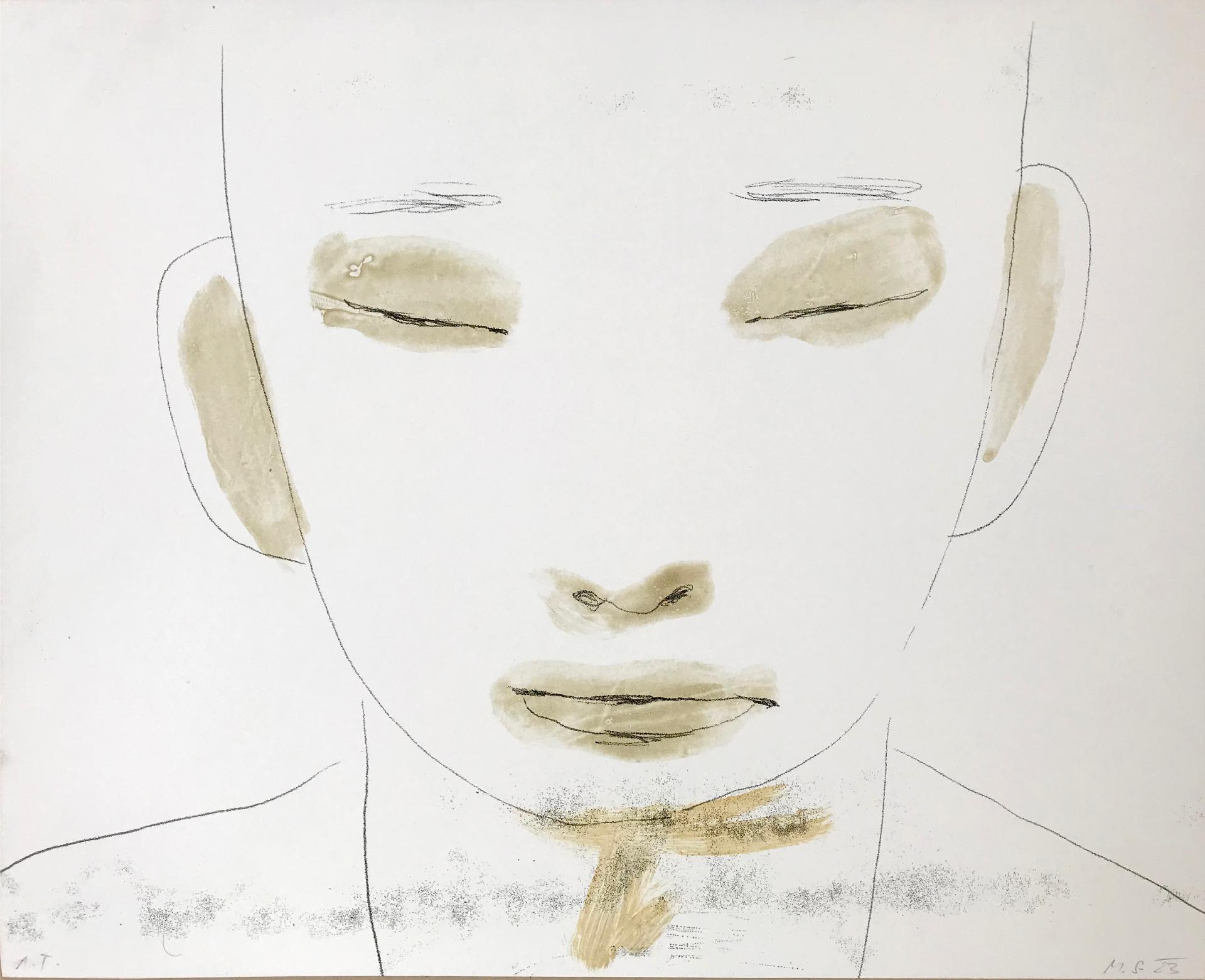
The Hollar Association has been operating in various forms since 1917 and still represents one of the most important domestic organisations focused on artistic printmaking. What is the current composition of your membership?
MILAN: Hollar today has around one hundred and eighty members of all generations. In recent years, interest in membership among the youngest authors even seems to be growing.
How does the selection process to join the association work?
MILAN: Applicants usually come to us through recommendations from one of the established colleagues, which in itself guarantees a certain quality. But of course, they can also apply on their own. At regular intervals, a committee meets to review the portfolios of applicants, and new members are selected based on a vote. The composition of the committee changes for each selection round.
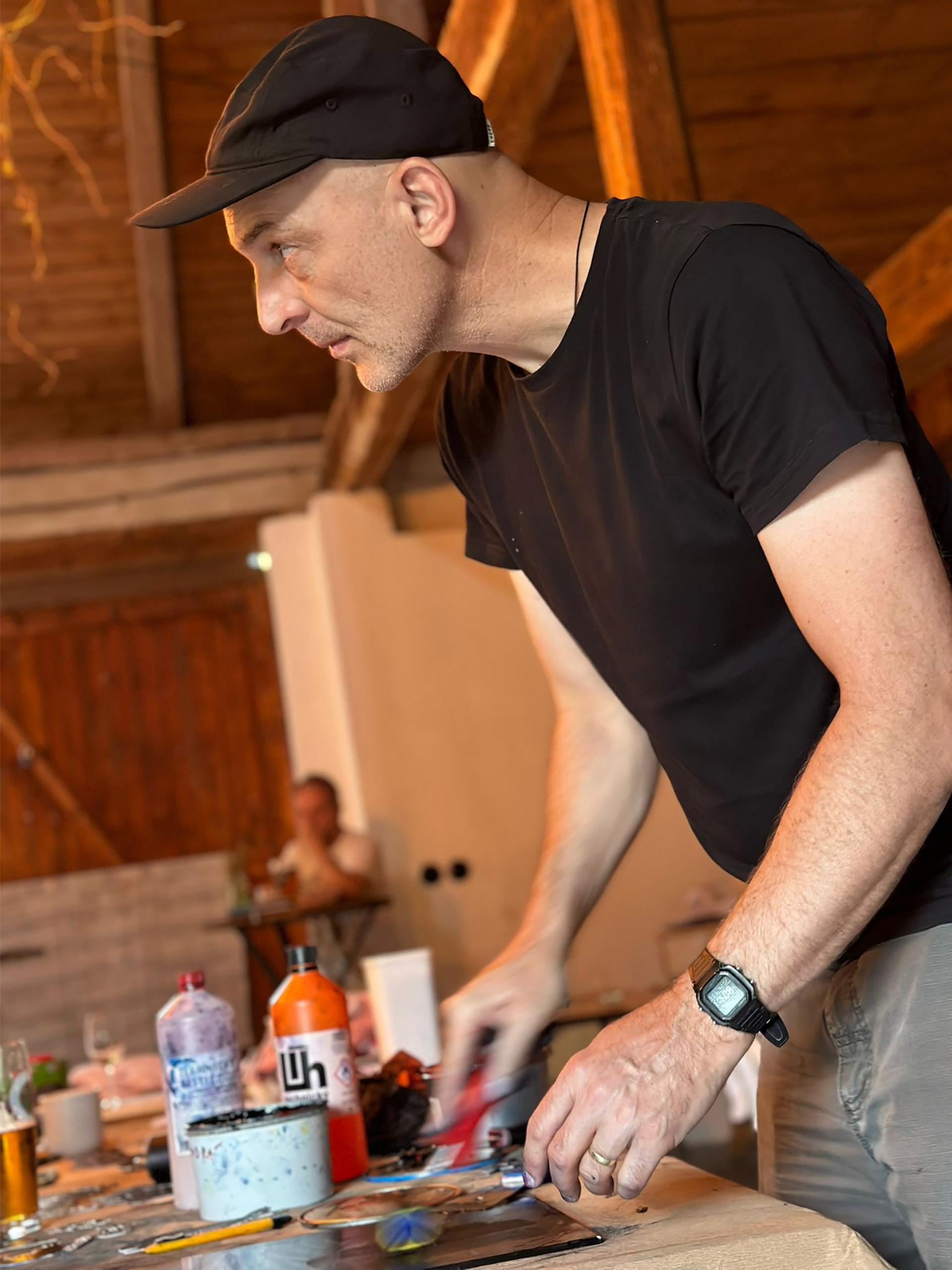
Do creators focused on digital printmaking also apply to join?
MILAN: Yes, they do. Digital printmaking is today a common part of graphic art production. And it is in no way generationally limited. For example, long-time Hollar member Jaroslava Severová has been working with digital printmaking since the 1990s. She has been awarded many times for her work, and her pieces belong to the “classics” of the field in the best sense of the word. Personally, I have no problem with digital outputs in principle, but in the current flood of digital visuality, one needs to be able to distinguish. Not everything that comes out of just any printer can be considered a graphic print.
So what parameters does a print have to meet?
MILAN: They are parameters usually associated with concepts such as fine art print or giclée print. Specifically, giclée print is defined by the printing standards established by printer Jack Duganne around 1990. Put simply, the print should have high resolution, should be produced on a machine with at least ten inks for sufficient colour depth, and must be made on archival paper of the appropriate weight. Such a print should have a certified lifespan of 100 to 200 years. With the use of modern UV-cured inks, it is also possible to achieve a distinct desirable texture in the print. To all this, of course, comes a maximally responsible approach from the printer, who communicates with the artist and together they strive for the best possible result. Digital outputs produced in this way can be perceived as an original work by the artist.
Apart from these objective technical parameters, however, it is also necessary to take into account the artistic side of the work. With digital technologies, there is often a risk that the artist will be steamrolled and lost in the endless universe of nearly unlimited possibilities. The result is often flashy, pandering, self-indulgent creations. But ultimately, the same threat exists in all graphic techniques, in all artistic disciplines.
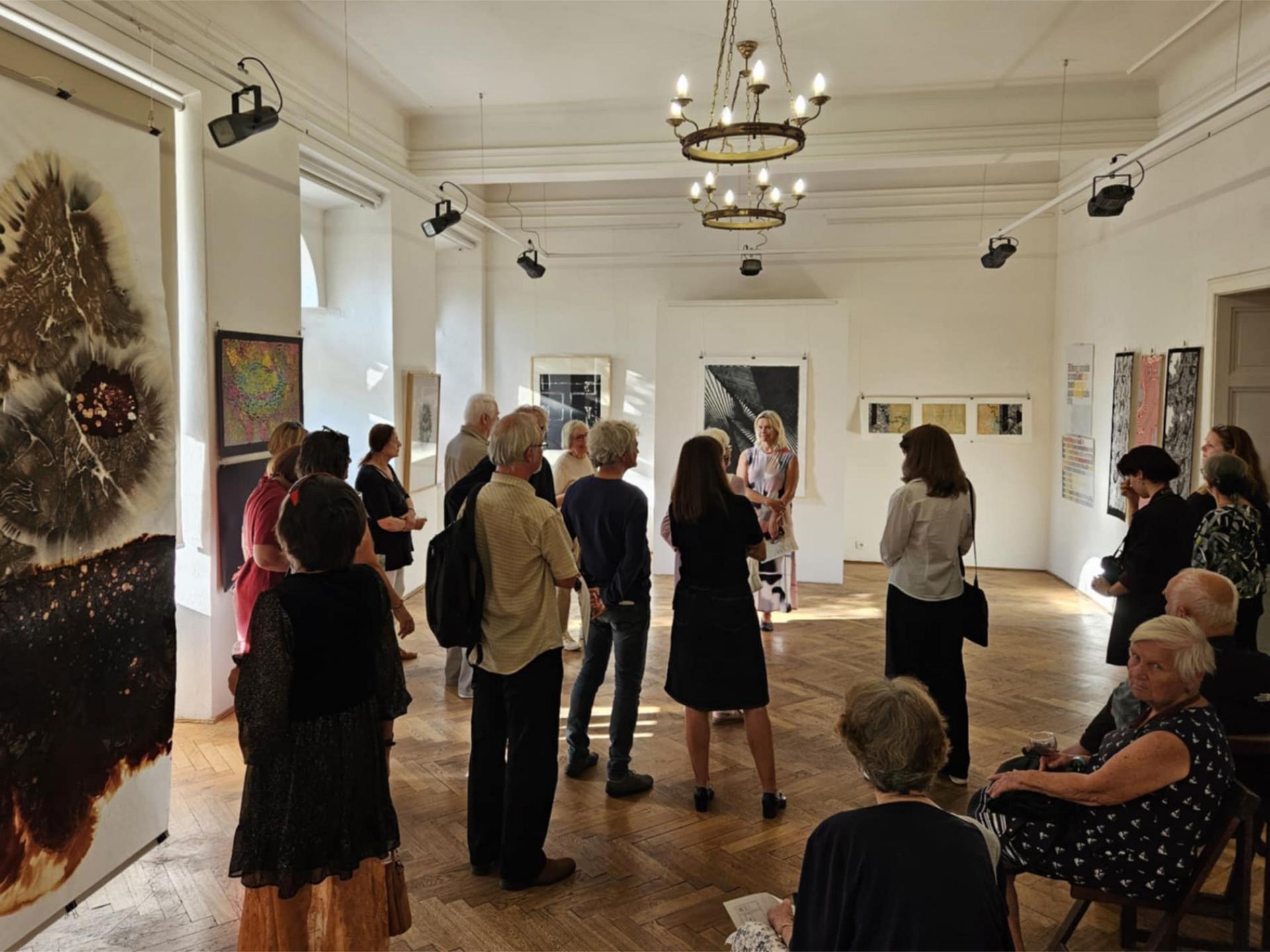
What, in your view, makes a good print stand out?
MILAN: Printmaking was originally intended for reproducing paintings, so it had a craft dimension. With the emancipation of printmaking as an artistic discipline, the dimension of individual artistic expression, exploration, and investigation was added to the technical aspect. Yes, the purity of craftsmanship will always be important in printmaking, but for me, in contemporary printmaking, the dimension of free handling of the means of graphic techniques is even more essential. Artistic printmaking is simply not just a world of rigid technological procedures, but above all a space for adventure.
Adventure comes into printmaking already with the imprint itself, which is, to a certain extent, always unpredictable…
MILAN: Exactly: the moment of imprinting is what makes a print a print. It is an absolutely crucial moment that brings a factor of surprise to the realisation of the artist’s intention, a space for wonder, for a certain degree of chance. I like the phrase “the magic of the imprint.” I think it nicely captures what I am trying to convey here. It is also the title of a book by Ondřej Michálek, an excellent printmaker and long-time active member of Hollar. This publication probably contains the most complete description of all possible graphic techniques and approaches to printmaking.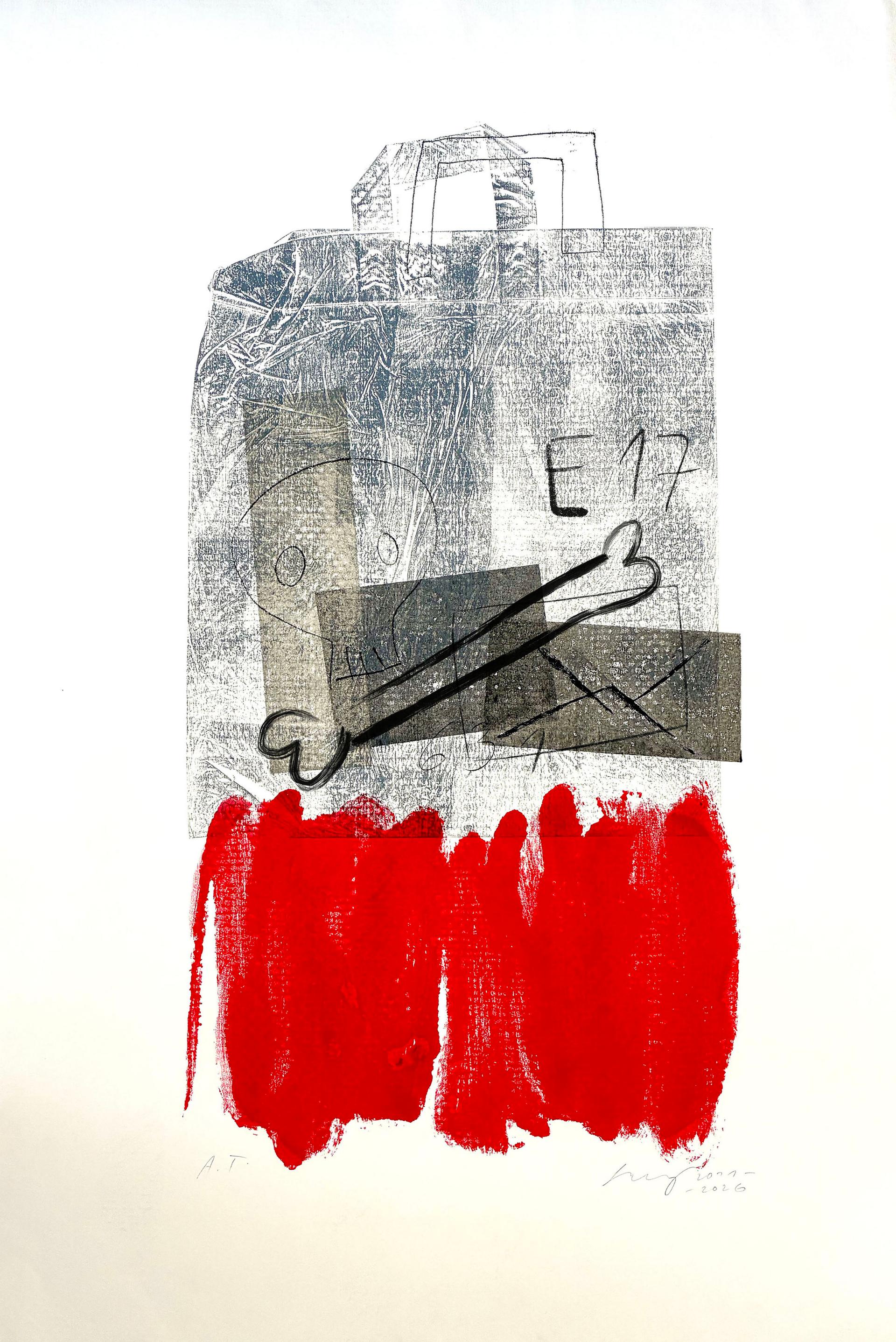
How should a collector assess the artistic quality of prints?
MILAN: It probably cannot be expressed objectively. There are many paths and approaches, and that is precisely what is exciting about art. Every collector is looking for something different. The question of the art market involves other pressures and principles, but I think that a good print should clearly and purely show that it is indeed a print, that it was created through the principle of imprinting. And it should have a certain measure of mystery. With some artists, you simply feel it — you look at their prints and all doubts fall away. I personally like works that are not a finished answer, but rather somehow question and explore the world around us. The viewer can then experience, through the work, similar feelings of free thinking and surprise as the author.
For instance, the Print of the Year award tries to look at artistic quality objectively…
MILAN: It is true that Print of the Year is probably the most publicly visible output concerning artistic printmaking. Together with the Vladimír Boudník Award, it is one of the few respected events that happen within the scope of graphic art in the Czech Republic, and regardless of the quality or coherence of the outputs, it is good that such steps towards a broader public take place.
The Hollar Association contributes to such steps, among other things, by running its Prague gallery and selling prints by its members. How does the sale work?
MILAN: We accept prints from our members on consignment, but we do not promote them too much. Some of them can be seen in the e-shop on the association’s website, but the most essential thing remains the possibility to choose directly on the premises of the gallery on Smetanovo nábřeží. In the future, we have the ambition to digitise the whole process more and to find suitable platforms for online sales.
What other activities does Hollar organise for the wider public?
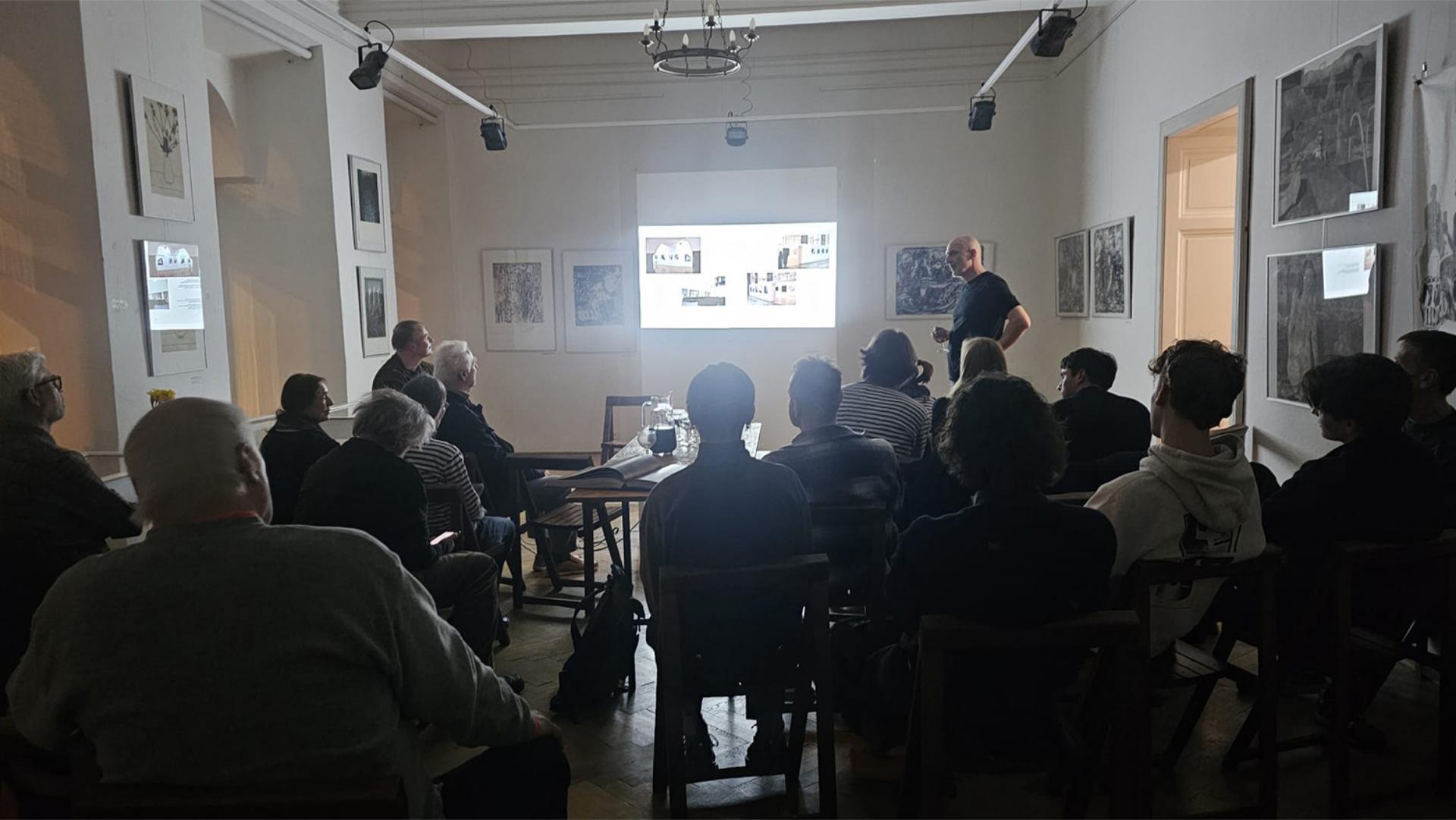
MILAN: The basis is the exhibition programme of the Hollar Gallery put together for the given year. Each exhibition is accompanied by guided tours with the exhibiting artists, and sometimes also practical workshops for the public. Other activities come from the individual members.
The current chairman of the association, Pavel Piekar, traditionally organises a series of readings and discussions called Writers Among Pictures at the Hollar Gallery in cooperation with the Association of Writers. The invited writers always somehow reflect their relationship to the visual arts and present texts that thematically touch on the world of visual art.
How are you actively involved in the association?
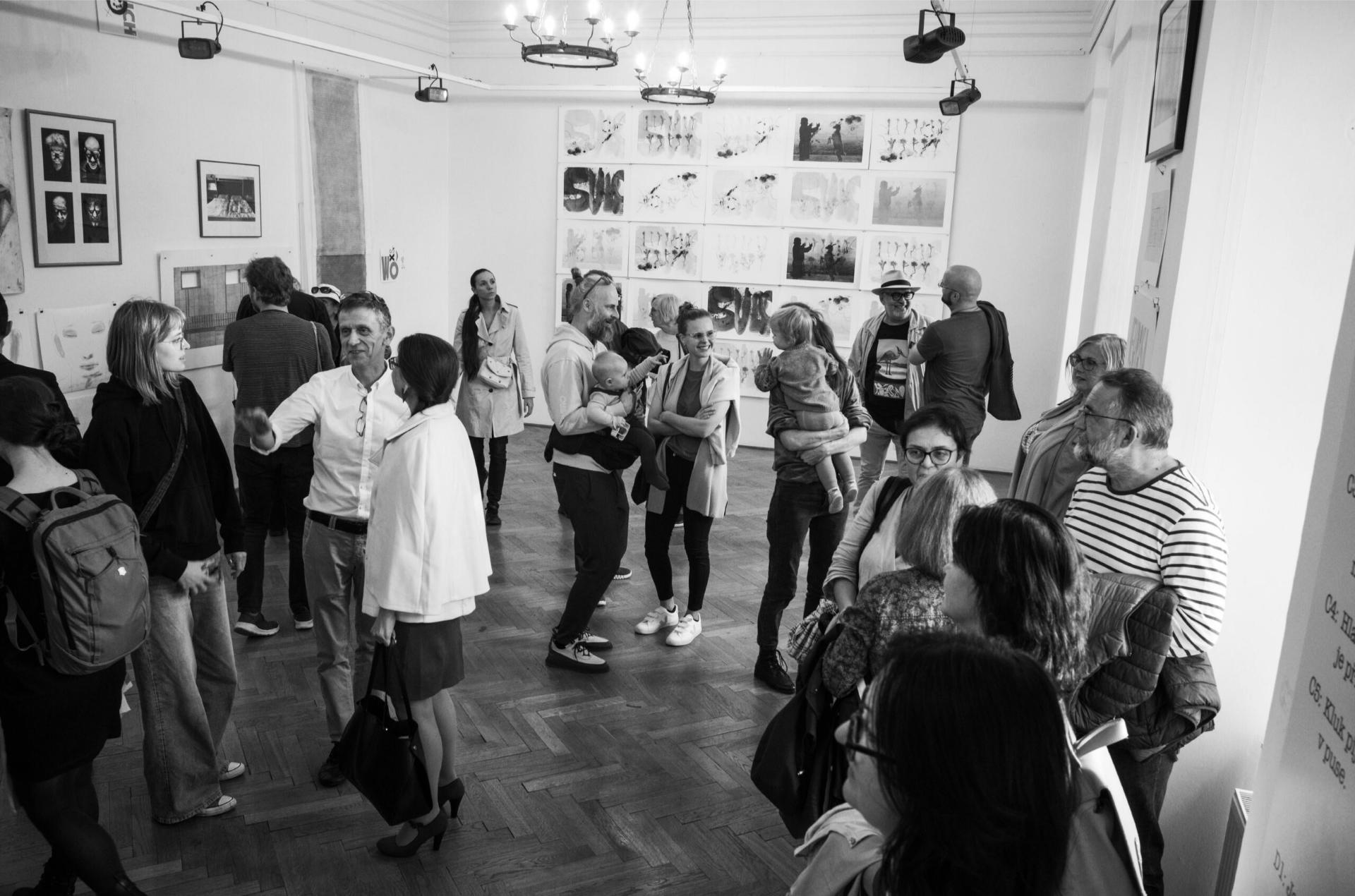
MILAN: I organise evening live discussions with female and male artists, members of the association, in the gallery space. It is by now a fairly established discussion series called Printmakers Live. As we already mentioned, Hollar is a large group of artists of all age categories. I was sorry that many artists never meet each other, and that within the framework of openings and guided tours there is no space for greater personal closeness and sharing, even outside artistic matters. Generational connection is important. At the discussions, older members share their unique experiences and memories from past decades. They have personally lived through what the younger ones only read about in books or on the internet. Younger artists, in turn, share their experiences from the current art scene at the discussions, naming the challenges that the accelerated present brings. A live meeting with an artist in the fairly intimate format of a discussion in a gallery, with the opportunity to ask anything, is a great complement to what we take away from an ordinary exhibition visit.
Who took part in the most recent discussion?
MILAN: The most recent guests were the artist couple Pavla Aubrechtová and Vladimír Gebauer.
Their life and artistic story is strong and authentic, an authenticity combined with modesty and humility. Before them, there was an evening dedicated to Lubomír Přibyl. This nearly ninety-year-old artist gave up his studies at the Academy of Fine Arts of his own free will, yet during the difficult times of the second half of the 20th century he managed to break through with his unique work even on the international scene. At the discussion, he also looked back at the very beginnings, when he exhibited at a factory canteen in Libeň together with Vladimír Boudník. For the younger generation, these are legendary events that they know only from literature. The next discussion will, for a change, be with an artist of the middle generation, the painter and printmaker Martin Velíšek, who is the current laureate of the Vladimír Boudník Award.
Now let’s look at printmaking through the eyes of a collector. Is it objectively possible to say which techniques are most valued?
MILAN: In general, the rule is that the smaller the edition that can be made from a matrix, the more valuable the print. Some matrices wear out more when passing through the press and do not allow for a larger edition of prints. For example, with drypoint, after a certain number of passes through the press, the drawing loses its original character, whereas a lithograph can be printed in a much larger edition. This is, of course, not an absolutely valid rule. Every technique can be modified by various artistic, experimental approaches, so even from more stable matrices, very fragile and small editions can be created.
Are there examples where prints in an edition are not numbered at all?
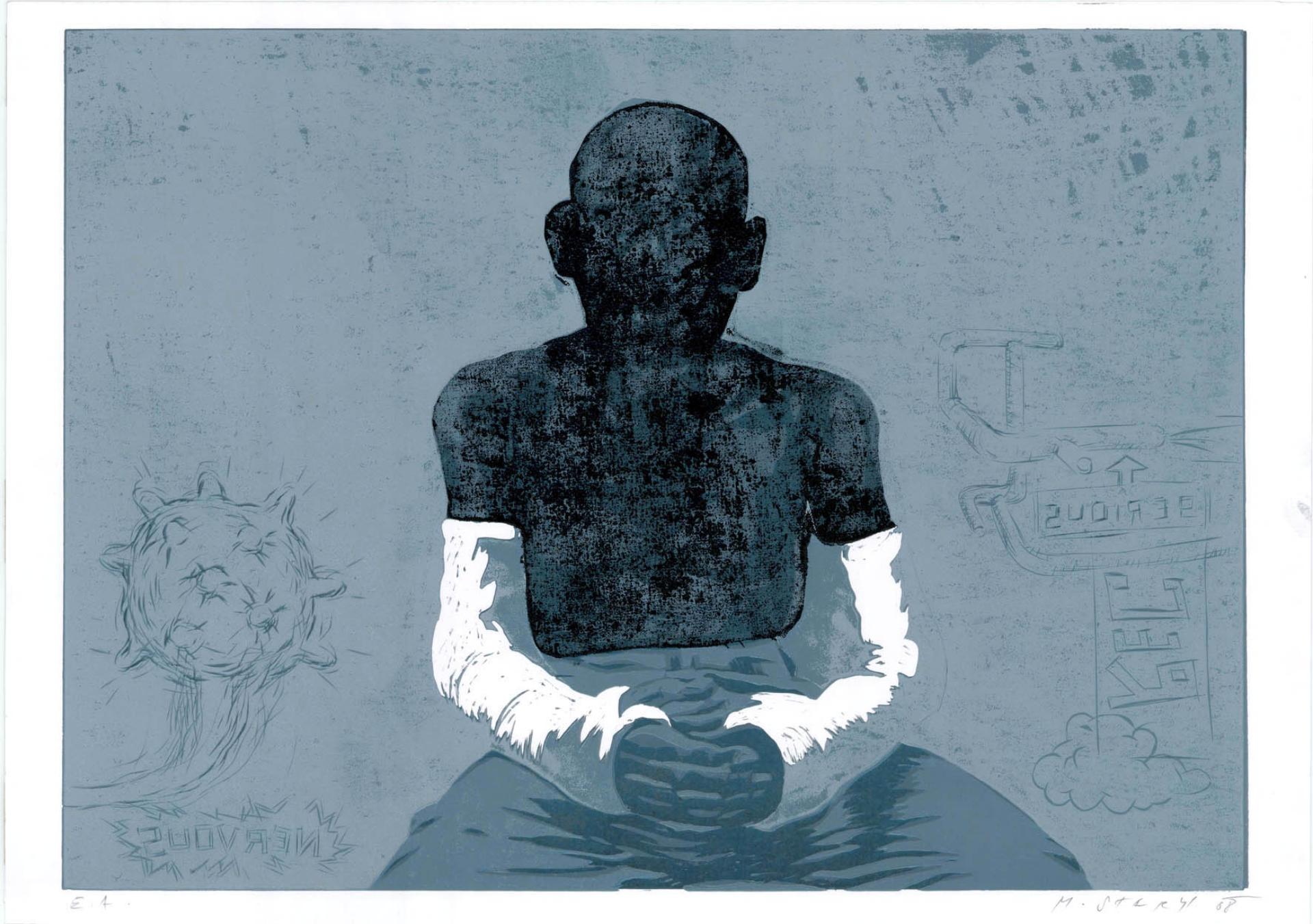
MILAN: Certainly, especially in more lively creative processes. For example, I usually do not work in the classical way of creating a matrix and then printing it in several identical copies — I much prefer to experiment, combine various techniques, and continuously intervene in the matrix. I am interested in the moment of surprise, the moment when a thing begins to live a life of its own. The result is not editions, but original artist’s prints as standalone works.
What exactly does an artist’s proof mean?
MILAN: It is a print that was made directly by the artist, with the artist personally present. Often these are preparatory, test prints that the artist makes before the printing of the whole edition begins, or before commissioning the work to a printer. From a collector’s perspective, these are usually the most valuable pieces. The reason is the unworn state of the matrix, as well as the testimony of struggle, uncertainty, and searching during the formation of the final shape of the print. They contain the greatest tension.
What other information can be helpful for a collector?
MILAN: The main thing is the signature, which marks not only the authorship of the work, but also confirms that the artist actually touched the print and approved its form, even if it was perhaps printed by someone else. Ultimately, if the print is made by a professional printer, it should also be marked with their signature. Usually, however, that is not the case.
The dating is also important, as it serves to compare the outputs of specific artists within their development over time. And last but not least, the buyer should certainly be interested in the provenance of the work — where the work has been exhibited along its journey and who owned it. One of the most important factors is also the placement of the work in the art-historical context. If the work is somehow significant for the artist’s personal artistic development, or even has an important position in the history of art in general, then its appeal to collectors is certainly greater as well.
Do you have any tips on how to spot a forgery with the naked eye?
MILAN: Of course, ideally the collector knows the work of the given artist and knows what materials were used in their time, how they themselves approached their work, and what they, for example, would never have done. If we are, however, buying a print without this knowledge, the technical form of the print itself can serve as a basic guide. Graphic techniques usually manifest themselves characteristically in the resulting print. With intaglio techniques, due to the high pressure in the press, a typical impression of the matrix format into the paper used is created. With relief printing, the layer of the colour used is usually clearly visible. With a technical reproduction, you will find none of the above. It is more complicated with planographic printing, with lithography. Here we do not have support in such strong manifestations of the chosen technology. Knowing the artist, their work, and the field in general is certainly the best way not to get fooled.
